

An Interview With President Marty Schmidt '81
In an in-depth discussion between President Marty Schmidt ‘81 and Walter Gibbs (EH ‘89), President Schmidt shares his thoughts on modern-day RPI, Summer Arch, deferred recruitment, declining numbers in Greek Life, and new expansion in the FSC office.
In the Fall 2023 release of “The Lamplighter,” Epsilon Eta’s semesterly publication, editor Walter Gibbs (EH’89) hosted an interview with RPI President Marty Schmidt. The conversation touched on President Schmidt’s experience at RPI, his thoughts surrounding Greek life, and a discussion of the summer Arch. We would like to thank Marty for taking the time to sit down with us! We are also appreciative of all the work RPI and the FSC office dedicate to developing Fraternity and Sorority life on campus.
Read the full conversation below:
Conversation on Greek Life with RPI President Marty Schmidt '81 by Walt Gibbs '89
Thank you to President Schmidt, and Pamela Smith, VP Office of Community Engagement and Communications, for the opportunity to discuss the challenges and opportunities facing today's RPI Greek System.
Walt: Let’s start by discussing your experience as an undergraduate at RPI. What do you remember from that time?
Marty: It's funny, I was thinking about that. What I remember is working hard. Four years goes by fast. Many of the alumni that I speak to have the same experience, which is that it was an incredibly rigorous experience in terms of the education. For me personally, it really instilled in me a sense of confidence, but also a feeling of the ability to tackle hard problems, and that was good.
The other thing that I remember is Troy was in pretty rough shape when I was a student. And so the social life, apropos of this conversation we are going to have, a lot of it revolved around Greek Life. There wasn't much to do in the city other than go to Sutters and hockey games, which I certainly did my share of. But in any event, certainly a lot of great memories and it started a great appreciation for the sort of capabilities that RPI provided me.
I hope that today's undergraduates aren't saying quite the same thing because Troy is so much nicer than it was. What stands out to you with regard to similarities and differences between your experience and today's students experience?
It's still a very rigorous education. A lot of times people question me about grade inflation, and so forth, and that's not the case. The rigor is still there. So the differences are kind of what stick out, right? We talked about Troy, that's a really positive difference. I met with about 500 undergraduates and graduate students in the first year. What struck me about that was, more then I recall and maybe I just didn't have the same experience as others at the time, there's a real sense of collaboration and mutual support that I see amongst today’s student body. But also there's been a healthy investment in the staff and systems to help the students be successful. I think there are a lot more student clubs. In fact, someone told me there’s about 200. And so you see students, with that much more activity in clubs than when I was a student here, will gravitate to a particular club and that's kind of their community for their time at RPI. And obviously, when I was a student here, I think it was 10% female. And we're up to about 31 or 32% now. So that's a meaningful difference when you think about the community.
So let's talk Greek Life. The relationship needs to be a beneficial one for both parties. What do you think the Greek organizations are bringing to the RPI student experience today?
A well-run, healthy living group, whether it's a fraternity or sorority, can be not only supportive of a student at RPI, I think it can lead to transformative experiences. It also creates lifetime friends when you're connected to individuals in that way. All those things are positive for the university. I look at it from the perspective of “if we can establish healthy and supportive living environments for our students, why not?” You have this inventory of fraternities and sororities so, from my perspective as an administration, our responsibility should be to try and make sure that they're running great and producing that kind of a living experience for our students that we want to see. I'm completely on board with that.
I also think one of the things that's important, and not necessarily always recognized, yet is particularly true today, is the fraternities and sororities, and the athletes, really play an active role in our engagement with the community in terms of supporting some of the local institutions. That's terrific. Troy is our home. A healthy Troy is good for us. Having groups that have as part of their mission the sense of supporting the community is a really good thing for everybody.
We are proud of the work that our undergraduates do along those lines. They've got a very strong relationship with one of the local food pantries.
The other thing I would say, Walt, is that there's an element of school spirit that these kinds of healthy living groups can help promote. I certainly can remember in my days, when we thought about GM Week and things like that, for a lot of the activities it was very much the living groups that would form some of the various teams that would compete. I think that's all good. And I've said this to your current members of Lambda Chi Alpha, I'm really pleased to see that they pack the seats behind the bench at the hockey games; they're stalwarts in terms of showing that support for the hockey program. So that's wonderful.
In past years, we've heard a lot about liability and alcohol use. What is RPI primarily concerned about now with how Greek organizations operate?
From my perspective, it's about resiliency. What I observed in my 40 years or so at MIT is that interest in fraternity and sorority life does somewhat ebb and flow and can be generational. So if you have a fixed asset which is the house, and if interest overall in Greek Life is waning, that can be financially existential for the system and for the individual houses. At least my observation in Cambridge is that those are some of the times when the wheels come off. I'm familiar with circumstances at MIT where, to make things work, the fraternity brings in non-members to fill beds. Those people aren't invested in that community and may not stick to the standards and norms. I put it all under the general umbrella of how do we create a resilient fraternity and sorority system that can deal with oscillations in interest and enrollment. Part of it is making sure that we're above critical mass in certain areas.
So one of the very keen focuses of the staff that we have that support the fraternity and sorority system is coaching and supporting the fraternities and sororities in the recruitment process to give them the best shot at attracting people. I think it all starts there, Walt, in that if we have a resilient system, then when things go wrong, we can work our way through them. And then the other challenge, but I wouldn't say it's secondary but I think of the resilience as primary, but obviously we live in a world where we're concerned about sexual assault, we're concerned about alcohol and drug abuse, we’re in a world where everyone is carrying a device that can broadcast around the world things that are happening in real time. And that creates a dynamic and a challenge when things go wrong.
RPI has strengthened its Greek Life team in the last few years. We really appreciate that commitment. Is there a framework that the team is using to proactively understand the strengths and weaknesses of the different fraternities?
In particular, I would single out Greek Dean Ethan Stubbs and his team. They approach this with the view of being biased to making the fraternities and sororities individually and collectively successful. I think everything that they do, all the drive they have, is really about how do we do that. And I've watched them in action. We've got some newer living groups, fraternities, some multicultural fraternities and sororities, that are forming. They're at a very nascent stage, and it's really encouraging to see how much Ethan and his team are working with them on a regular basis to coach them along, help them figure out how they're going to drive participation. I think the team enters with that bias, and then what they do in detail depends very much on the fraternity or sorority that's in front of them.
Good to hear that. LXA has benefited from a strong relationship with RPI. Our house on Sunset Terrace is built on RPI land. It was quite a collaborative effort in the 1990s to make that happen.
I have been in the house. The first semester I was here, I visited every fraternity and sorority that would let me in. I really wanted to get a sense of it. What I found is a very heterogeneous community in terms of the questions I would ask when I visited: why did you join and what do you tell others when they're considering joining? And it's really interesting to get the response. So I'm familiar with Lambda Chi, in fact I can see them out in my backyard. And they seem to be very well behaved. So that's good.
We're proud of what we consider to be a continuous culture of excellence for 30 years now. Part of that culture is our alumni support.
I think the involvement of the alumni is really important. Alumni that are disengaged, not necessarily with fraternities and sororities exclusively, but with the institution, a lot of times their sense of the university is frozen in time from when they left. And things change, things evolve, and having the alumni understand the current state and the current environment is really important. That only happens if you're involved. That kind of engaged alumni is good for all of us.
The overall number of students engaged in Greek Life has dropped quite a bit since about six years ago. I'm sure there's a lot of reasons for that, but the drop really did begin right around 2017 when Rush was changed from the fall to the spring. What are your thoughts on when freshmen should be considered ready to join Greek organizations?
I would say that I really don't feel like I have enough knowledge to have a strong view on that. What I can share with you is that I meet once a month with student leadership, basically the presidents of every class, the Grand Marshal, PU, the head of the Fraternity Sorority Council, the head of the student athletics. I meet with them and the Provost and the Dean for Student Life, and we spend about an hour together just trying to talk about whatever is top of mind for them. This topic did come up last semester. There was a diversity of views on this amongst the students. There was one individual who said they were concerned about this. A woman who had joined a sorority shared that she felt she wouldn't have been ready early in the first semester of her freshman year, and she appreciated an opportunity to look carefully and then make that decision in the spring. So there are pros and cons.
I understand the decline. I have a hard time knowing that's causal with the change in policy, and I would want to understand what the nationwide trends look like. So it's a little bit a question in my mind as to how much causality you can assign to that. I know that Ethan and the team are open to having conversations and trying to get as much as possible quantitative about the role this is playing, but it's hard for me to draw a hard conclusion one way or the other.
An issue that we're finding is that the Arch program, by sending juniors away for a semester, hits us with regard to fraternity leadership. The Greek Alumni Council was discussing the idea of integrating Greek and other structured leadership experiences more formally into Arch, perhaps fulfilling Arch’s objectives for the semester off campus. Would that mesh with your thinking about what the Arch is trying to accomplish?
I'm not clear on that one. Let me give you my take on Arch. Pretty much immediately upon arrival that bunch of questions was put to me. Are you going to kill Arch? I wasn't prepared to make a decision like that on Day One. But what I've learned is that part of the challenge was implementation, the way in which Arch was introduced and rolled out, things like mandatory don't really necessarily land well with people. Arch has been a bit of a push early on. So the question that I was trying to wrap my arms around is “when it works for an individual student, is this really a valuable thing?” And my conclusion is that it can be. I've been really heartened by the number of students and parents, and employers, who have shared with me their significant appreciation of the Arch Away experience. What I conclude is, when it's working, it's transformative.
The challenge comes when it's not working. We have a team working hard to move the needle in a meaningful way so that for everyone (A) we know who's going to succeed in Arch, and we have an ability to sort that and (B) we make sure that the Arch Away and the Arch summer experience are really transformative. I have a lot of hope, and my hope and our goal are really to make Arch a pull rather than a push. So that a student comes to RPI saying I know that if I do Arch, it's going to have these positive outcomes.
We've managed the Arch Away issues because we're of a size that we have enough leaders and the beds equal about half the number of people in the chapter. We've talked about the drop in Greek numbers, and weak finances make weak organizations. We've talked about making the chapters more resilient. Is there anything else that RPI is looking at to help with regard to the low Greek house occupancy issue?
I think there's a sizing question. If we really look ourselves in the mirror and say it's never going to be the size it was 30 years ago, then we might find ourselves feeling like maybe this living setting, maybe this House, is too big for the future. And can we downsize in a way in which we build in the resiliency. Your point about the number of beds versus the number of members of Lambda Chi is an interesting example. That gives you a cushion in some respects, and a lot of the fraternities have zero cushion. One of the things we need to think about as part of the administration is how do we move maybe the fraternity or sorority into a setting that gives them some of that kind of resiliency. I think we also try and work with them. So how do you want to market this fraternity or sorority? As these groups develop more unique identities it makes it easier for students to say, “oh, I want to go there because that's a community of artists or that's a community I can relate to.”
A policy change of allowing students to live in the Greek housing during the Arch summer would help the occupancy issue. Do you feel that lessens the goals of the Arch summer?
That came up as you might imagine in my first year of listening, and I just decided I wasn't going to make that decision until I had a new Provost. Our Provost, Rebecca, started in August, and one of the things she's doing is working with the whole team to do a complete assessment of where we're at with Arch and where we need to go next. Certainly how we think about summer housing related to Arch is a topic on the table. I don't know where they're going to land on that one, but I know it's under discussion.
Let's talk a bit about judicial process. It seems to have gotten a bit better with regard to how fraternity infractions are being addressed. Is there an ongoing effort within the Greek Life Dean's office looking at how the current judicial process is defined and implemented?
One of the things that I was really just thrilled to see was the Alumni Fraternity and Sorority Council; I just thought that was brilliant. Roger Grice 'G87 is the Lambda Chi representative. I tend to think of the fraternity and sorority alumni and the administration as having a co-parenting relationship. What I see as the value of that fraternity and sorority council is that it ensures that when something goes wrong that's not the first conversation the administration is having with the alumni. It becomes a forum with Ethan and Travis to sit with the alumni and say, if this happens, this is our process and these are the possible outcomes. Do you disagree or agree? If you disagree, let's have a conversation about it. Having that kind of a forum is important so, that when the wheels come off, I'm not surprising you with what we're going to have to do. And then you've got the relationship so there's also an opportunity, within respecting people's privacy, to have a conversation about the specifics. And you and I have a trusted relationship, and we're not screaming at each other. I just think that Council is such a critical thing because if we can have adult conversations when we're not under the gun, we're going to reach solutions that make sense to both of us, so that when we are under the gun, we're aligned.
That's exactly what we're looking for, a clear and transparent process.
The price the alumni pay is engagement with the administration. If it's Roger, that's great, and then he needs to make sure that message is shared with the alumni community. Deepening those ties between the administration and alumni is a really important thing.
We would like to yet again thank President Schmidt for his time and for the work he puts in to develop student life at RPI. We are looking forward to see what the future holds!

EHZ Celebrates First Annual Brotherhood Appreciation Day
“At the end of the day, it’s all about taking the time to recognize the effort and impact the work all our brothers do.”
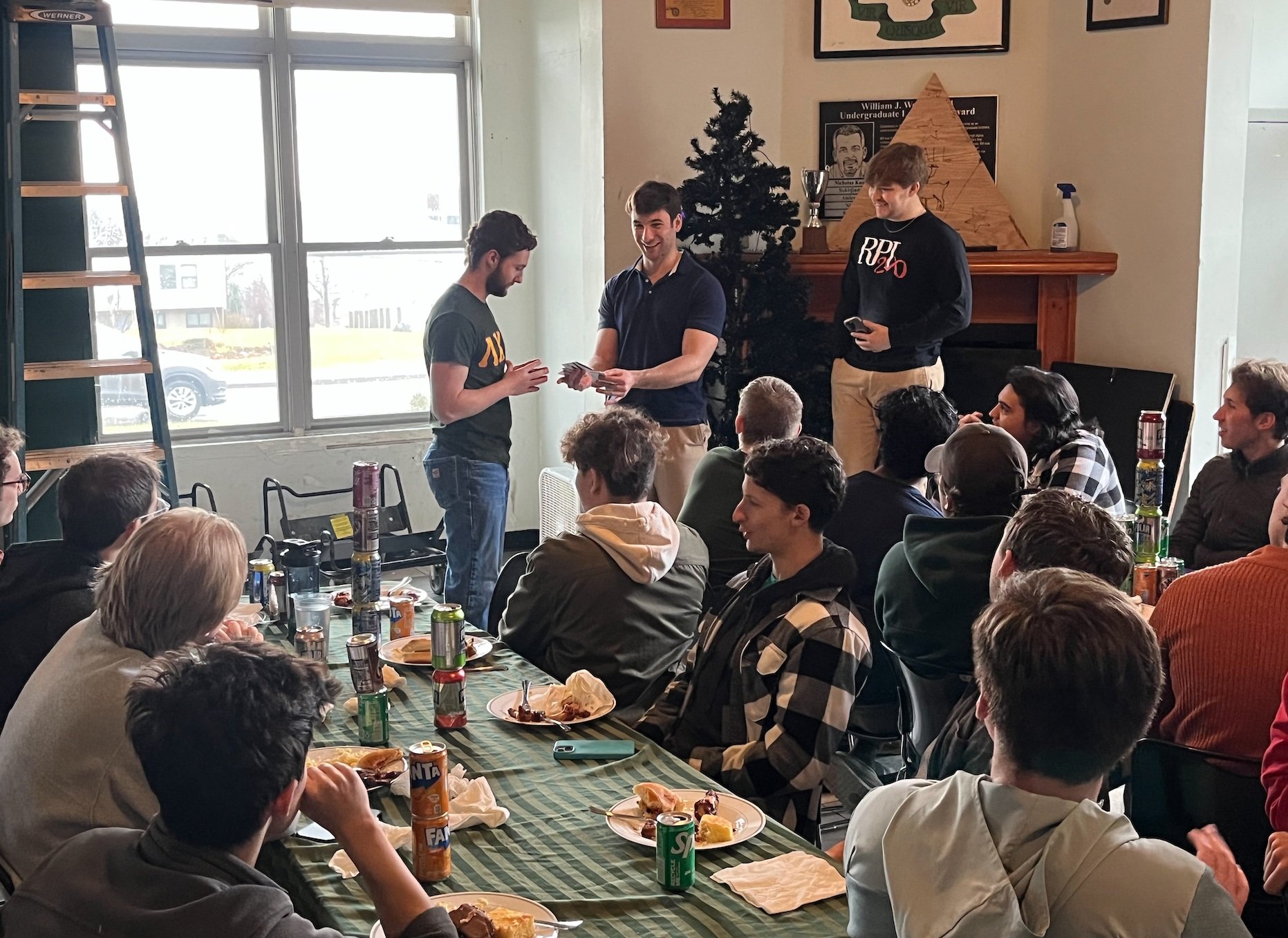
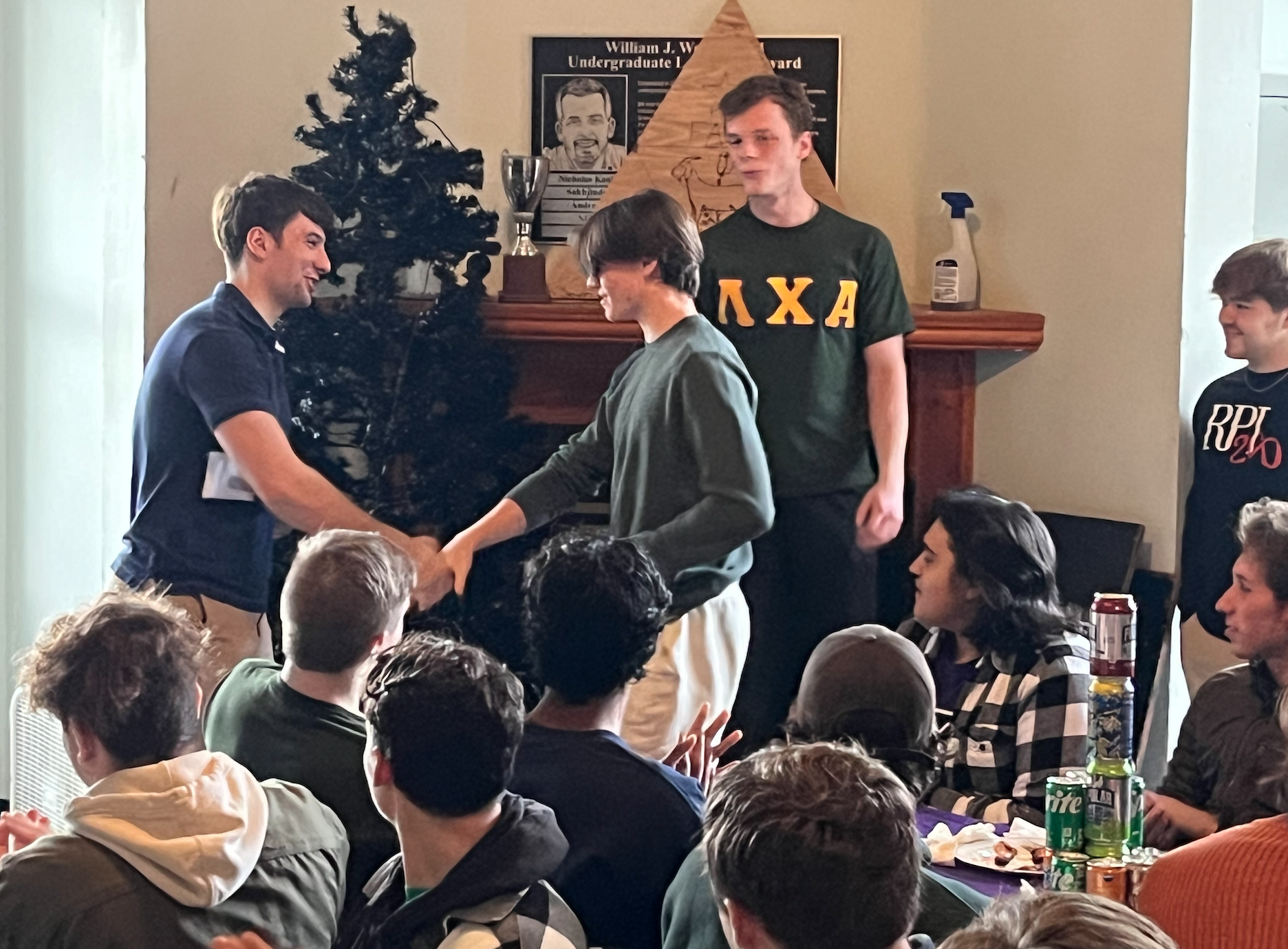
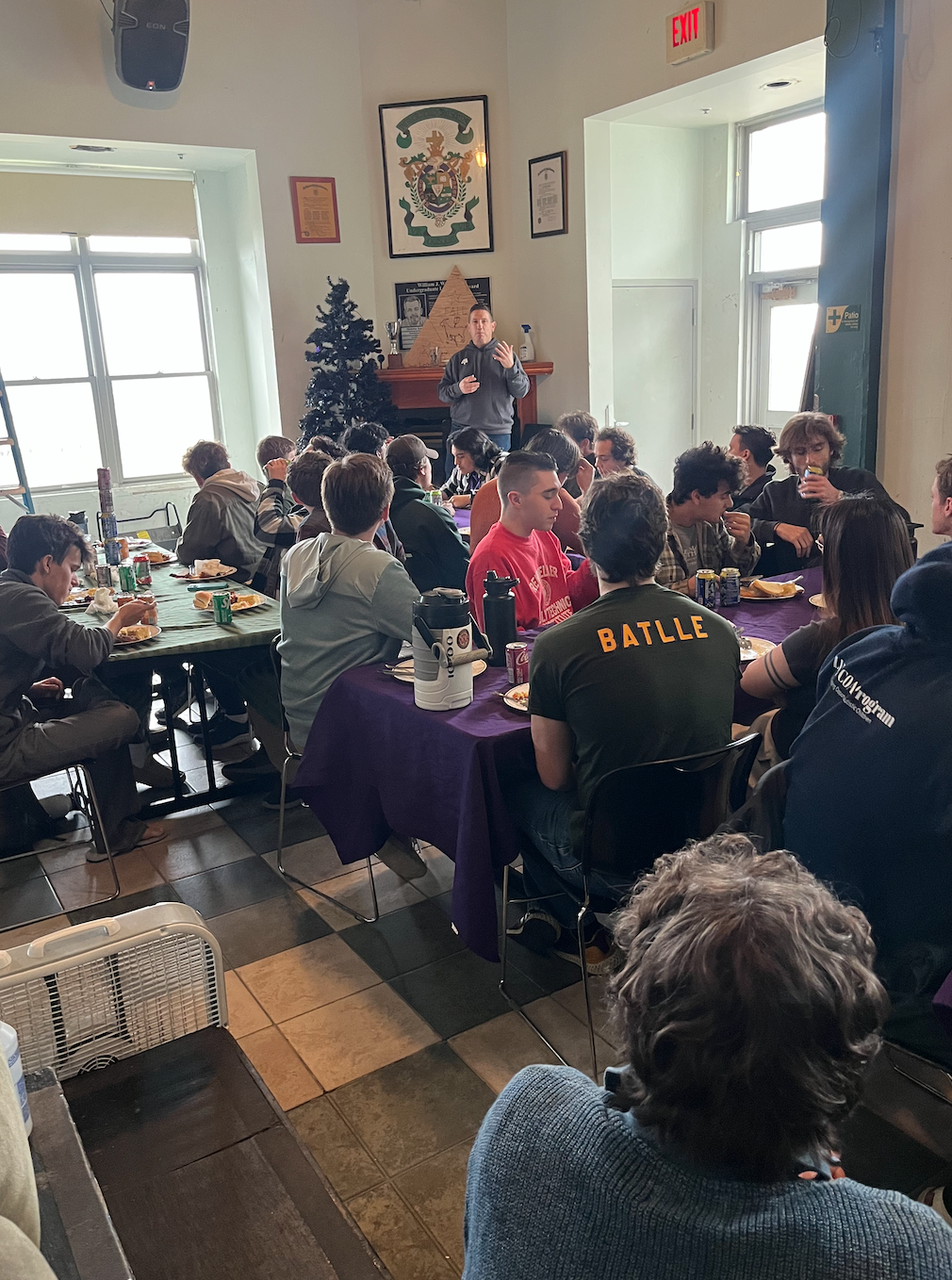
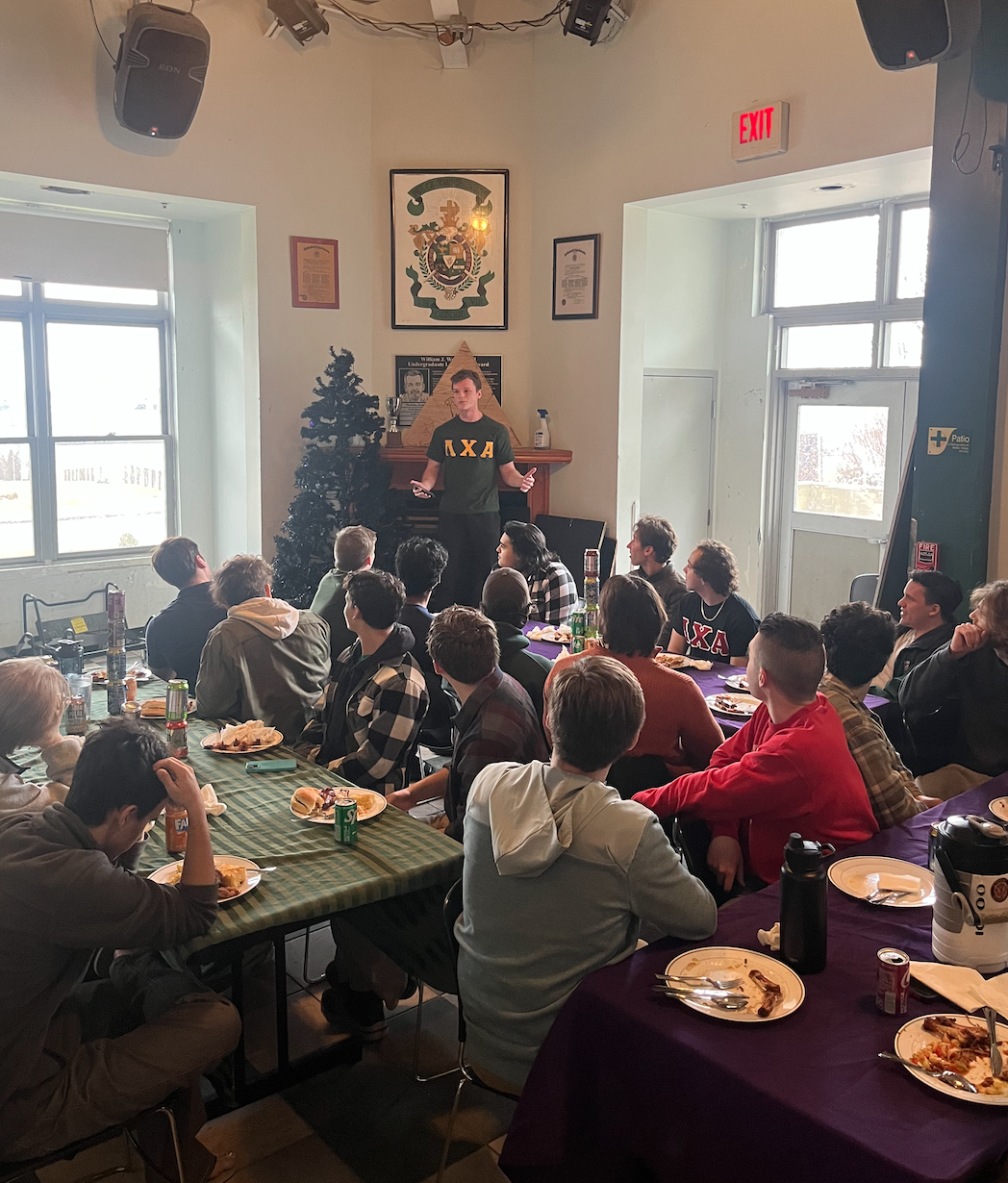
This past Saturday, the chapter held its first annual Brotherhood Appreciation Day at the chapter house. The event was led by our Board of Directors (BOD) President Geoff Seber and our High Beta Matt Emerson. Geoff explains his vision for the event below:
“At the end of the day, it’s all about taking the time to recognize the effort and impact the work all our brothers do.
Our fraternity is a highly productive, hardworking, passionate, and sophisticated brotherhood that takes a significant amount of personal and volunteer time to move our Chapter one step forward toward being the best we can be. Without any assumption of recognition or praise, each of our brothers take the time to be a part of something very special, and that is Lambda Chi Alpha at RPI.
EHZ Brotherhood Appreciation Day is to celebrate ALL of that work throughout our semester. We celebrate the broader brotherhood for all of the hard work, we celebrate the special individuals who take that extra time to be in leadership roles, and we recognize those very special brothers who always go above and beyond!”
As part of the festivities, brothers enjoyed barbecue while accolades were given to last year’s High Zeta and brothers who went above and beyond to help in facets of the house ranging from rush, to philanthropy, to even organizing our initiation with the NYU chapter this past semester. The first Brother of the Semester award was given to James McClean ‘26 for Fall 2023:
“James has really gone above and beyond, especially as a young member of the house. From developing a relationship with local non-profit Capital Roots to organizing our intramural sports, to even running our Bowls on Sunset event, he has taken up leadership and service without it being asked of him. He was recently elected to the High Theta position, where he looks to even further expand our relationship with Hope-Seven and the great work that has been done this past year. Congratulations James!” - Carl Steffens, 2023 High Alpha
Perhaps the most significant moment was the recognition of High Pi Roger Grice’s constant and dedicated service. Roger has been with the chapter for nearly thirty years, serving as an invaluable advisor and a wealth of knowledge. We are immensely grateful for Roger, without whom our stalwart traditions and chapter excellence would never be possible. Thank you, Roger!
The Brotherhood Appreciation Day was a great way to kick off the semester with enthusiasm. It will certainly be a continued EHZ tradition for years down the road.
See some highlights from the event including a reflection from Roger, words from Geoff and Carl, and the recognition of James as brother of the semester.
Celebrating Brotherhood and Tradition: A Recap of the 2023 Fraternity Alumni Weekend
A weekend of brotherly love: A Recap of Alumni Weekend 2023
The bond of brotherhood is something that never truly fades. Rather, it grows stronger with time, nurtured by shared experiences, challenges, and memories. The strength of our bond was truly evident during this year's Alumni Weekend, held from October 12th to the 14th. The event brought together alumni from different eras of our chapter’s history, providing them with an opportunity to reconnect, reminisce, and reflect on the journey of our beloved fraternity.
With a packed schedule of events, engaging activities, and heartfelt reunions, the weekend provided a perfect opportunity for alumni to relive their college days and for active brothers to connect with those who have gone before them.
Alumni Talk: A Glimpse into Our Rich History
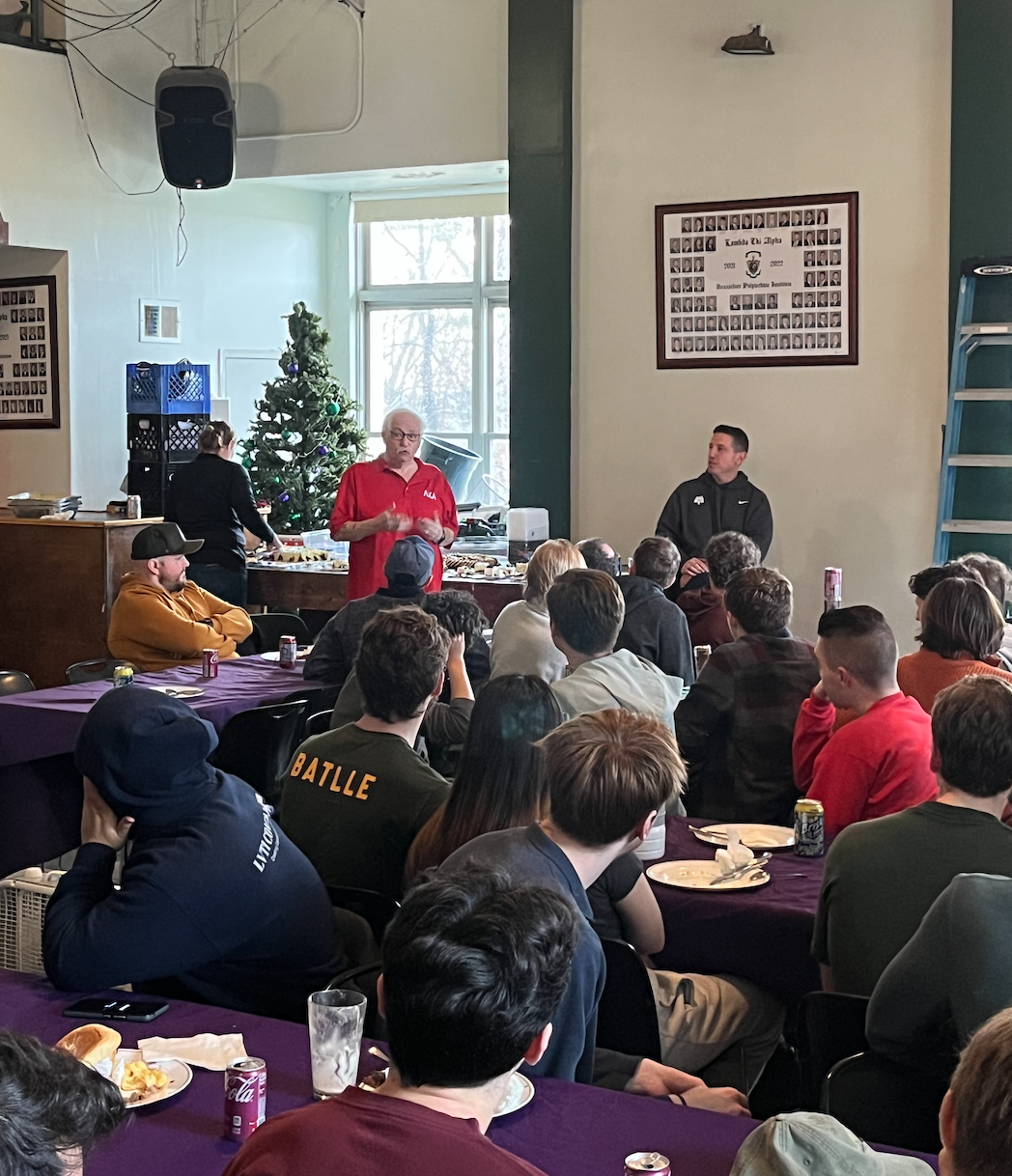
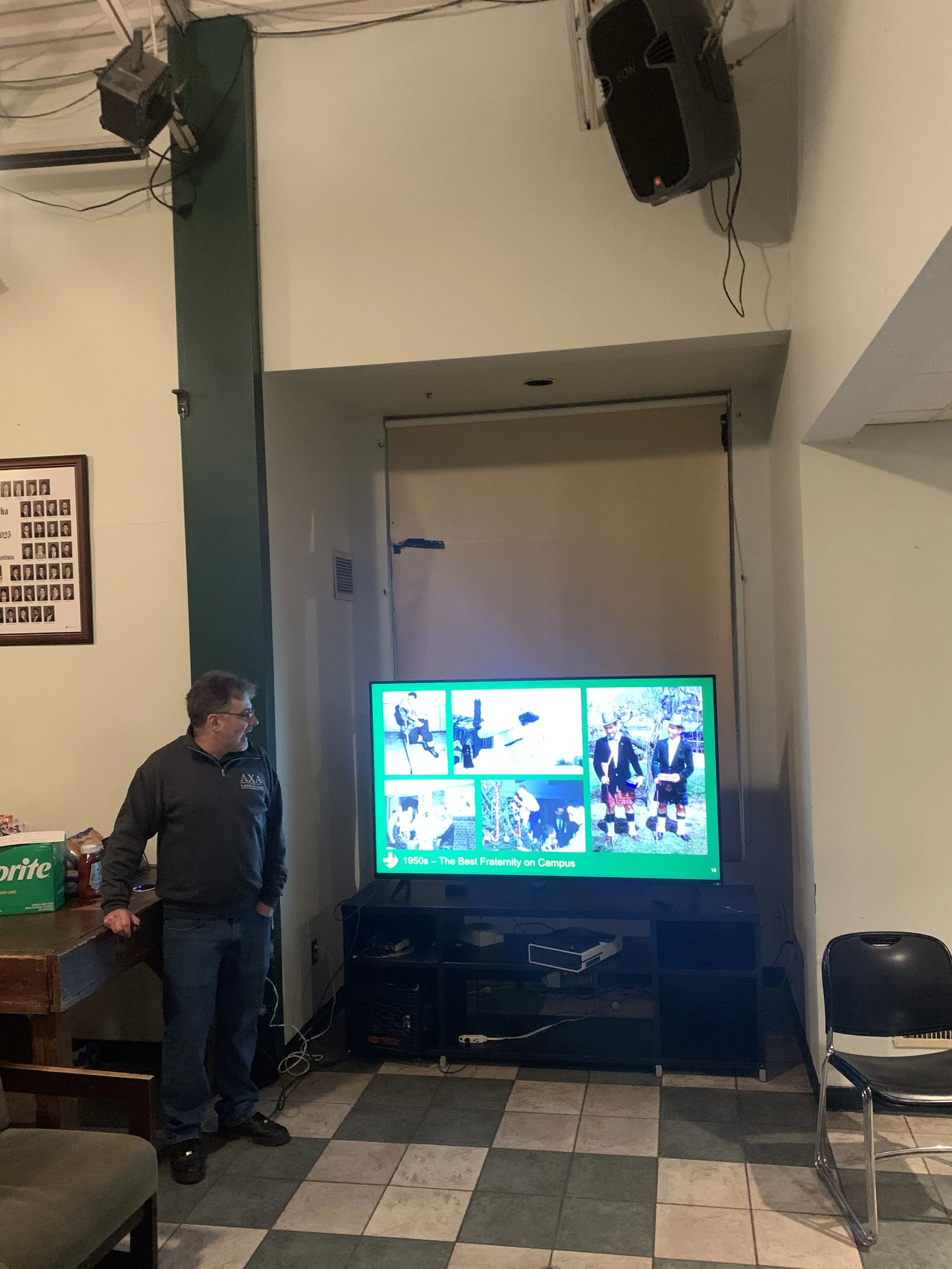
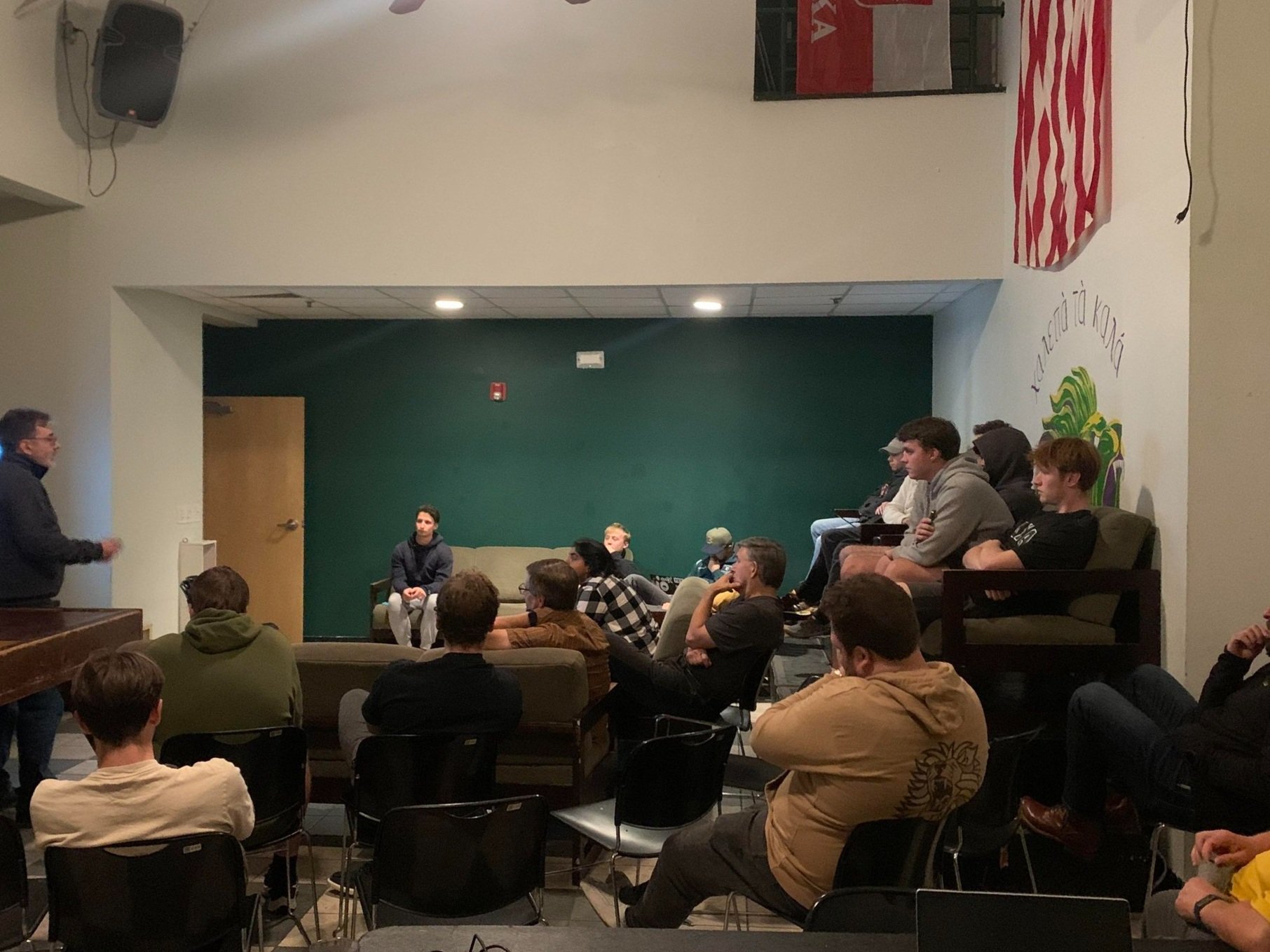
Starting the weekend off with a bang, Walt Gibbs, a member of the class of 1989, gave the yearly alumni talk to the active brothers. Walt took us on a journey through time, tracing the history of our chapter from its inception to the present day. His talk was rich with stories and accompanied by historical photographs, providing our current active brothers with a visual insight into the evolution of our chapter and the resilience it has shown in the face of adversity over the decades. During his presentation, Walt also highlighted the remarkable contributions of specific individuals who left an indelible mark on our chapter, such as Remo D'Ortenzio and Dave Krashes.
Meet and Greet: A Walk Down Memory Lane
Friday night saw the chapter room opened to returning alumni, providing them with a glimpse into the current state of the house. Alumni took house tours, gaining insight into the daily lives of active brothers. Later in the evening, brothers and alumni engaged in meaningful conversations over bowls of chili, chips, and snacks, with alumni sharing stories from their time as undergraduates and discussing the current state of Greek life on campus.
BBQ: Reliving Memories Over Burgers and Hot Dogs
Saturday saw the chapter house open once again for alumni to revisit. The gathering was accompanied by a delicious BBQ spread, featuring burgers, hot dogs, and chips, as alumni and brothers sat on the newly renovated patio, reminiscing about old times. Alumni were encouraged to explore the chapter house, revisiting familiar rooms that held cherished memories. Laughter and heartfelt conversations flowed freely, reaffirming the deep bonds of brotherhood.
Golf: A Friendly Competition on the Greens
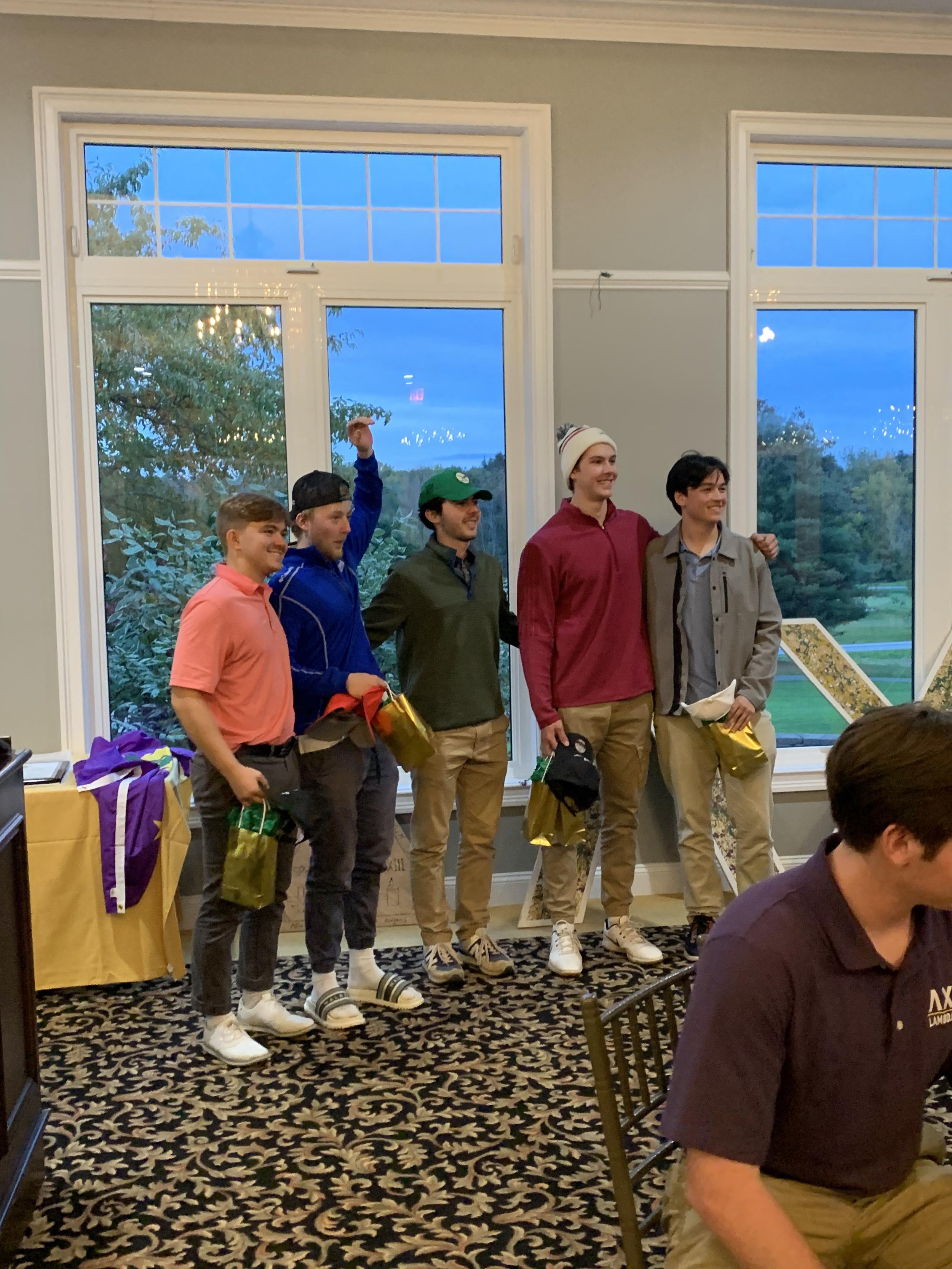
Simultaneously on Saturday, our second annual Reunion Weekend Golf Tournament teed off at the Van Patten Country Club, thanks to Guy Licata's efforts in organizing this event. With a shotgun start at 12 pm, 41 golfers gathered for a day of friendly competition. Despite concerns about the weather, the skies held, and everyone had a fantastic time. The winning group, consisting of active brothers Matthew Emerson, Clayton Wrinn, Nicholas Fadden, and Evan Owens, achieved an impressive score of 61.
Dinner and Awards: Honoring Achievements and Sharing A Vision
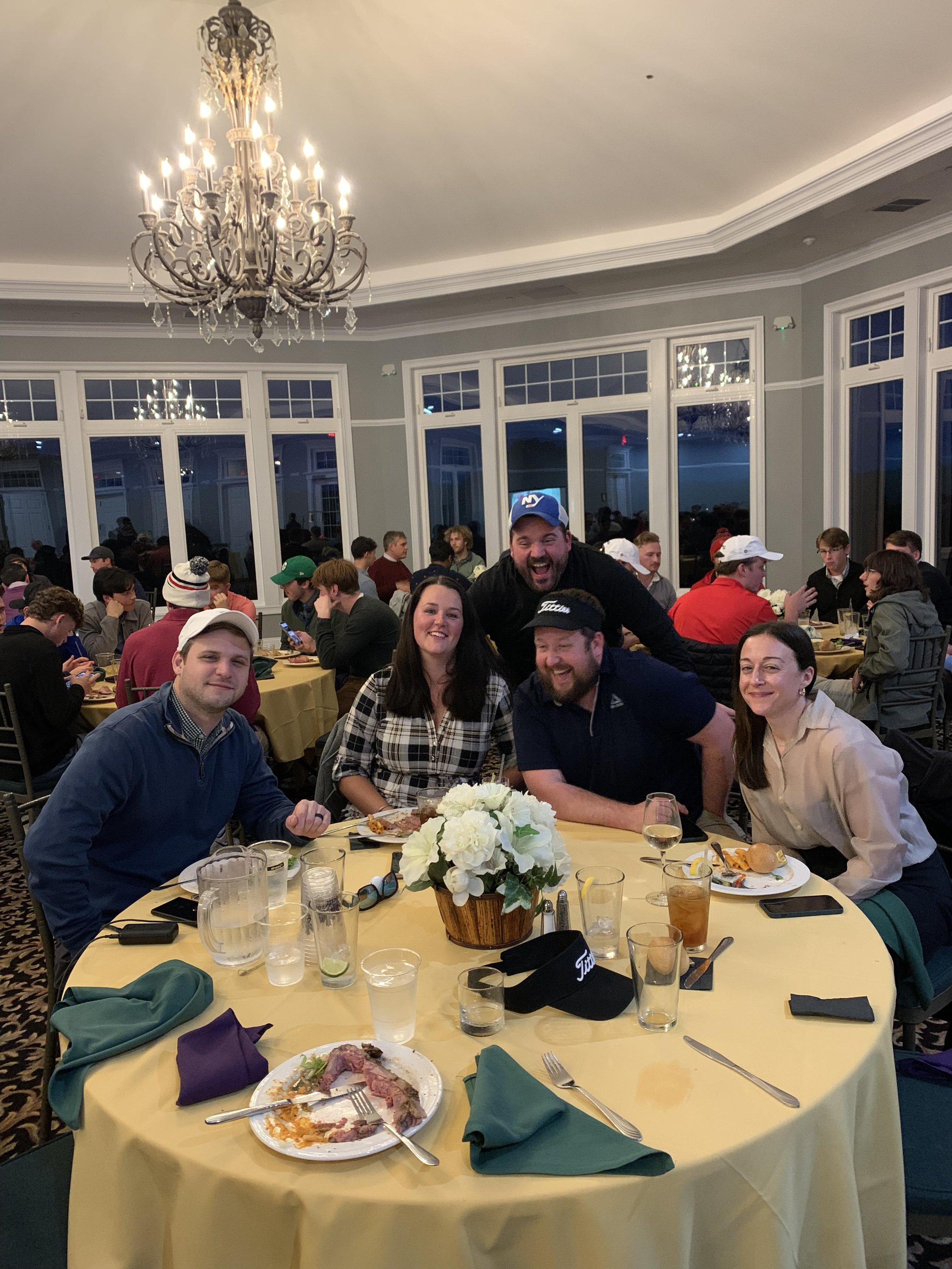
Following the golf and BBQ, the alumni weekend continued with the annual Housing Corporation and Educational Foundation meetings. A delicious buffet dinner was served at the Van Patten Country Club House, featuring Chicken Marsala, Penne ala Vodka, and Prime Rib. The evening's program included a state-of-the-active chapter address by High Alpha Carl Steffens, the presentation of the prestigious Remo D'Ortenzio Award to Jamie Burkhardt, and a keynote speech by Ray Lutsky to conclude the evening.
Conclusion: A Weekend to Remember
This year’s Alumni Reunion Weekend was a resounding success, but it wouldn't have been possible without the enthusiastic participation of our alumni. Special thanks go to Dave Drew, Walt Gibbs, and Guy Licata for their invaluable contributions to planning this remarkable weekend. We hope this year's event will serve as a stepping stone towards even bigger and brighter reunions in the future. We encourage our alumni to share their fond memories and stories with friends, in the hopes of bringing more of our brothers back home to our beloved fraternity house. We cherished the opportunity to host you all over the weekend and sincerely appreciate your continued support and love for our active chapter. Thank you, and here's to many more Alumni Reunion Weekends to come!
Article by Matt Regan
Edited by Dale Roe
Greek Life at RPI Shows Signs of Revival in Spring 2023
After several years of COVID restrictions and RPI Administration restrictions, Greek Life at RPI is finally coming back to life…
After enduring several years of COVID-19 restrictions and administrative challenges, Greek Life at Rensselaer Polytechnic Institute (RPI) is making a remarkable comeback. The road hasn't been easy, with hurdles including changes in recruitment policies and the impact of the Arch program. However, the arrival of a new administration led by President Marty Schmidt and recent developments signal a positive trajectory for the fraternity and sorority system.
Navigating Past Challenges
Before the pandemic, RPI's Greek Life faced a significant setback when the Greek Life Task Force mandated that first-year students couldn't join fraternities and sororities until their second semester. This not only hurt recruitment efforts but also limited the duration of students' membership in these organizations.

Changes in IFC membership with relation to major school policy changes.
The Arch program brought further challenges by requiring students to attend summer classes post-sophomore year, reside exclusively in campus housing, and spend a semester away from campus during their junior year. This had major financial implications, with chapters losing a semester of rent for those with houses, and created leadership turnover among juniors.
COVID-19 added yet another layer of complexity, as students became more isolated, distancing themselves from fraternities, sororities, clubs, and student government. This isolation led to a decline in recruitment numbers. Additionally, RPI's decision to close fraternity and sorority houses to student living had a significant impact on involvement, engagement, and finances.
Growth and Progress within the Greek Community
With the pandemic subsiding and a new administration under President Marty Schmidt, there is a noticeable shift in attitudes toward Greek Life, and progress is evident:
New Faces: The addition of key personnel is a notable development. Ethan Stubbs, the newly appointed Associate Dean for Fraternity and Sorority Commons, is actively working on reforms to bolster chapter leadership and education. Furthermore, Mel Daley has taken on the role of Assistant Dean for Fraternity and Sorority Commons. Notably, Nate Crowell, a member of Epsilon-Eta, contributed as a part-time intern in their office during the past semester.
Representation in IFC: Epsilon-Eta brothers Peter Crisileo and Nick Khoo have been elected to the positions of IFC President and IFC Vice President of Finance respectively, and are actively working to represent the greek community at RPI.
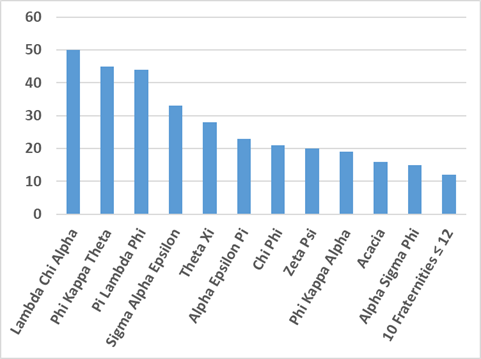
Number of active members in RPI Fraternities in Fall 2023
Membership Growth: Fraternity membership is on the rise, with the IFC president reporting a 10% increase from the previous year, bringing the total fraternity membership to around 500. This positive trend has been aided by Ethan Stubbs' efforts to enhance recruitment structures and planning across chapters. However, it's important to note that the Greek community remains relatively small, with an average of about 20 members per chapter. There is also significant variation in chapter sizes, with the top 5 chapters accounting for over 50% of the community.
Legislative Changes: In a significant development, RPI has relaxed its regulations concerning alcohol use. The consequences for fraternities caught with alcohol have shifted from a mandatory minimum two-year suspension to a "suggested" two-year suspension.
Improved Relations with Public Safety: The Department of Public Safety (DPS) has introduced a program designating liaisons within each chapter. This initiative has significantly enhanced communication and collaboration between chapters and the DPS, ultimately rebuilding trust within the Greek community with the hope of reducing anti-Administration sentiment.
Community Showcasing: To celebrate the vitality of Greek Life, both the IFC and Panhellenic Council (Panhel) jointly organized "Fraternity and Sorority Spirit Week" towards the end of the semester. This event provided a platform to highlight individual chapters and the Greek system as a whole.
Diverse Representation: The Greek community at RPI is actively pursuing inclusivity. The establishment of the Multicultural Sorority & Fraternity Council (MSFC) supports culturally based organizations on campus.
Advocacy for Autonomy: The IFC has been proactive in advocating for the creation of their own Judicial Board. This entity aims to assist in disciplinary hearings and potentially grant the Greek community more autonomy from the school.
Challenges Facing the Greek Community
While positive strides have been made, significant obstacles persist in the efforts to rebuild Greek Life at RPI:
“These kids are the least interested in Greek Life I’ve ever seen at any campus..”
Student Demographics: One of the primary roadblocks faced by the Greek System at RPI is the demographic of students the institution typically attracts. The average RPI student is primarily focused on their academic pursuits, with limited enthusiasm for community involvement or social activities. As an international TKE recruiter noted, RPI students are often regarded as among the least interested in Greek Life when compared to other campuses. It's not a question of capability; many of these students have the potential to be leaders and socialize, but they simply do not prioritize it. This lack of initial interest in fraternity participation presents ongoing recruitment challenges, impacting many chapters.
Apathy Toward IFC: Another enduring issue is the lack of active engagement from chapters with the Interfraternity Council (IFC). Many chapters demonstrate hesitance to fully support IFC events and initiatives. This reluctance can be attributed to the prevalent mindset of prioritizing individual chapter interests over contributing to the broader Greek community. This perspective, often characterized as a "zero-sum" mindset, obstructs the sense of unity necessary for the collective advancement of the community.
Communication Within Chapters: Diverse chapter sizes and leadership capabilities have given rise to ineffective communication about new initiatives. Consequently, trust issues persist among members, as many feel disconnected from the larger goals and intentions of individuals like Ethan Stubbs. This communication gap perpetuates a sense of skepticism among the average member toward both the Greek community and the Administration.
The Judicial Process: Despite some recent legislative improvements, RPI's policies continue to be notably stringent and rigorously enforced. This is exemplified by instances in the past semester where three chapters faced interim suspensions due to disciplinary infractions. The Judicial Process remains shrouded in opacity, leaving the community with questions about the extent and manner of punishments for various infractions.
Hope for the future
Greek Life at RPI is slowly but surely emerging from the challenges posed by the pandemic and institutional policies. While the state of Greek Life on campus remains far from perfect, with the support of a new administration, dedicated leadership, and ongoing efforts to enhance community relationships, there is an air of optimism as Greek Life aims to regain its former strength.
EHZ Brother is Selected to Represent Undergrads
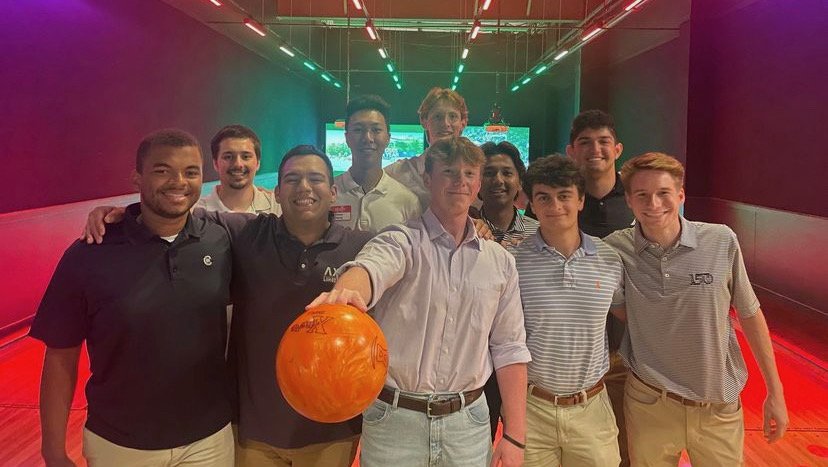
This fall, brother Seth Levine has been selected from hundreds of applicants to represent Lambda Chi undergraduate students internationally as a member of the Student Advisory Committee!
The Student Advisory Committee consists of sixteen undergraduate members. It was formed to help the Lambda Chi Alpha's board of directors and professional staff members stay in touch with current undergraduate concerns and challenges, and to allow undergraduates to communicate with and advise Lambda Chi Alpha's highest levels of international authority.
Seth will gain practical experience and knowledge about how a non-profit corporation operates. He will be involved in discussions that include identifying and drafting policies and objectives for the entire organization, reviewing and approving an annual budget of $6 million, and developing initiatives and programs that will enhance the experiences for all our members. Congtulations Seth!
Brother Axel Batlle and Biomedical Engineering Team Pioneers Breakthrough in Skin Cancer Diagnosis

In a groundbreaking collaboration between SurgiVance Inc., a New York City-based startup, and a team of talented biomedical engineering students at Rensselaer Polytechnic Institute, a revolutionary method for rapidly diagnosing skin cancer at the point of care is on the horizon pending FDA clearance.
Brother Axel Batlle and his team played a pivotal role in developing a critical component of SurgiVance's innovative biospecimen processing platform. Their task was to create a secure and contained sample preparation method, and to accomplish this, they invented a multi-chamber device that promises to transform the landscape of skin cancer diagnosis.
The device involves a sequence of chambers for optimal sample preparation. A tissue sample is inserted into a staining confinement chamber, followed by the release of a stain onto the sample through a valve. Subsequently, a third chamber releases a washing solution, resulting in a properly stained and washed sample ready for analysis under a microscope. What sets this solution apart is not only its efficacy but also its cost-effectiveness and passive nature, relying solely on gravity for reagent exchange, eliminating the need for mechanically active components.
The team’s effort were nothing short of impressive, with the team winning the prestigious "Best Design" award at the capstone research team projects ceremony. Their contribution is not only acknowledged within the academic sphere but has significant real-world implications.
Daniel S. Gareau, M.C.R., Ph.D., founder of SurgiVance, expressed his appreciation for the students' efforts: "The Rensselaer students were immensely helpful to SurgiVance in developing a diagnostic surgical pathology solution. It is, effectively, a histopathology lab in a box. It has the potential to transform skin cancer diagnosis and really improve patient care."
The impact of Axel and his team's work goes beyond the accolades they received; it has the potential to revolutionize the field of skin cancer diagnosis and, ultimately, improve patient outcomes.
From the Brothers at Epsilon Eta, a huge congratulations to Axel and his entire team!
EHZ Chapter Takes Strides for Ovarian Cancer Research
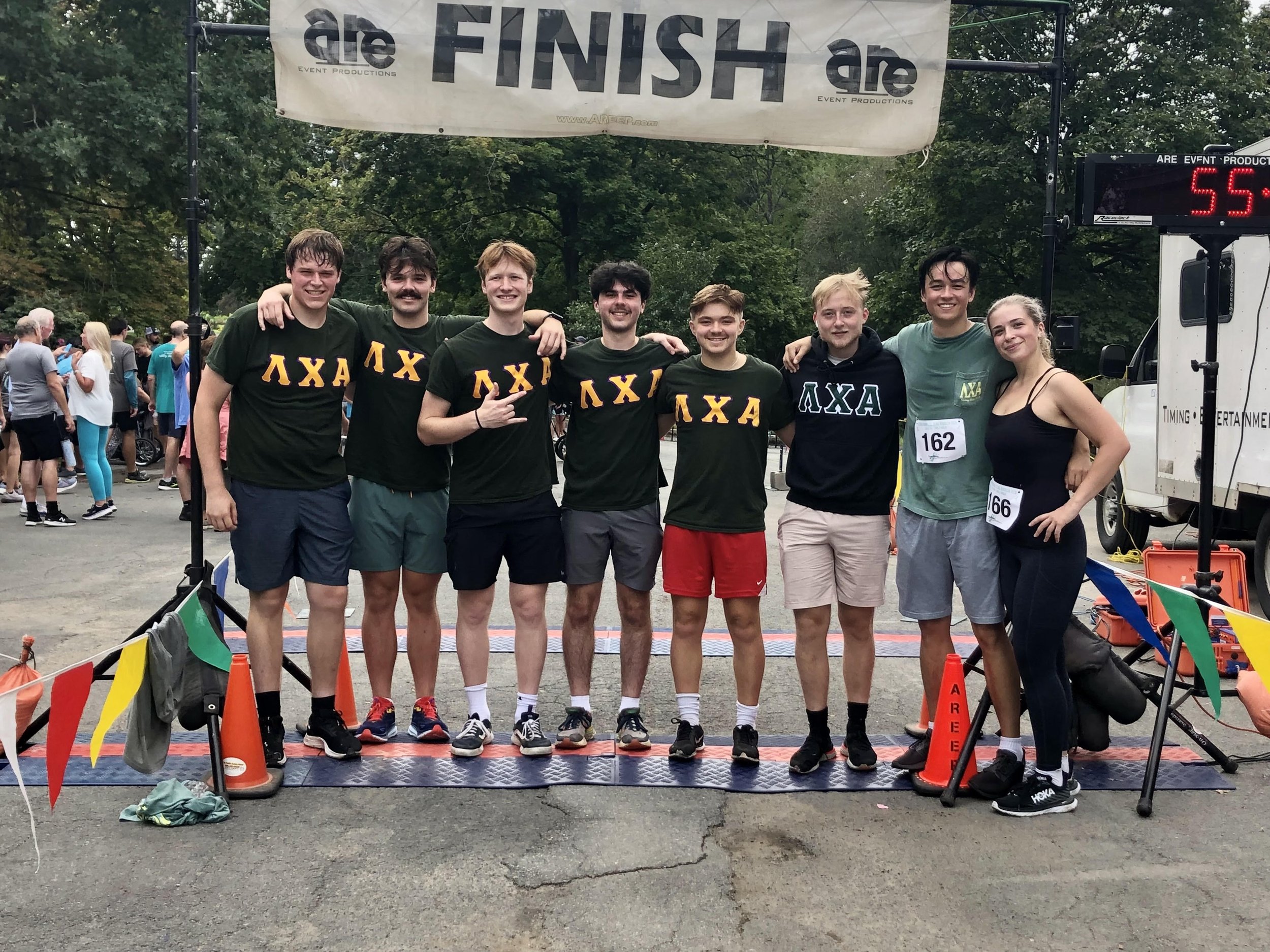
Brothers finish 5k run to raise money for ovarian cancer research and to support their brother.
From Left to Right: Matt Regan, Jules Phillips, Joe Mergen, Evan Owens, Matt Emerson, Clayton Wrinn, Nick Khoo, & Krista Wozniak
Since its founding in 1937, the Epsilon Eta Zeta Chapter of Lambda Chi Alpha has demonstrated a strong commitment to philanthropy and community involvement. Our efforts were continued last month on Sunday September 10th, when 7 of our brothers accepted the challenge of running a 5k to raise money for ovarian cancer research.
The Teal Ribbon Run/Walk is hosted annually by Caring Together Inc., a non-profit organization in New York State’s Capital Region that donates to promising ovarian cancer research projects. This year, the event raised over $70,000, and the funds were donated to local research efforts led by Dr. Cheon at Albany Medical College and to the Foundation for Women’s Cancer.
For brother Evan Owens, this event carries more personal meaning. Evan explains, “This event has become a tradition in my family ever since ovarian cancer took my aunt’s life in 2003. Over the years we have run, walked, volunteered, and today my mom is the president of the board of directors. Since the cause is so important to me, it meant a lot to see brothers sacrifice their Sunday morning to run with me. It takes a special group of people to run a 5k at 9am on a Sunday to support a cause that doesn’t affect them personally, but thankfully that is exactly what we have here”.
Article by Evan Owens EHZ 1514
High Alpha addresses alumni in Spring 2023 "State of the House" Letter
Alumni Brothers,
I’d like to give you all a broad overview of how the active chapter is doing - from recruitment to philanthropy to just a sense of the character of the house….
Alumni Brothers,
I’d like to give you all a broad overview of how the active chapter is doing - from recruitment to philanthropy to just a sense of the character of the house.
In the 2022-2023 school year, Epsilon-Eta recruited 23 new members, bringing our total undergraduate membership to 77 at year’s end. This made us the biggest house on campus with 15 more brothers than runner-up Pi Lambda Phi. We maintain a strong emphasis on recruitment principles and seek to bring in high-quality men, many of whom didn’t originally consider joining Greek Life. With regards to Philanthropy, the chapter rolled out two major new events in the Spring 2023 semester. We hosted “Bowls on Sunset” with Phi Kappa Theta, selling rice and macaroni bowls across campus. The chapter also held a field day on ‘86 Field with Alpha Phi to support the Autism Self Advocacy Network. We also ran our semesterly food drive with Alpha Phi, where we collected 2,469 pounds of food for Hope-Seven. Epsilon-Eta also continues to hold a place of prominence on the IFC with brothers holding the Executive Vice President and VP of Finance positions. Two brothers also won the RAA Emerging Greek Leader Award, continuing a long-standing tradition of Lambda Chi’s winning the award every year since its inception.
In Fall 2022, the chapter replaced the traditional committee system with a more streamlined tri-team. It consists of the involvement team, the biggest team ran by the High Beta charged with planning events- from recruitment to social to alumni events; the High Kappa’s education team centered on member education and pre-initiation experiences, and the House Manager’s house improvement committee. This tri-team system has led to a more refined operation with improved cooperation between officers, and allowed more brothers to become involved. The house improvement committee in particular has noticeably improved the cleanliness and repair of the chapter house, working with the Board of Directors to roll out renovations in just one semester. In general, the atmosphere around the house is fraternal- enthusiastic and friendly but also focused, hard working, and stalwart in upholding our values. We look to continue to upbuild Epsilon Eta’s excellence going forward with our amazing group of brothers.
The undergraduate brothers would like to thank our High Pi Roger Grice and Board of Directors President Geoff Seber for another year of service to the Chapter. One cannot speak highly enough of them and all they do for the chapter. Outside of his tremendous help running the house, Roger continues to serve as President of the Alumni Fraternity & Sorority Council, furthering Lambda Chi’s presence and activity in the alumni community. Geoff is ever-conscientious, working with the actives to improve the chapter house and was instrumental in finding our amazing new chef Eddie after Bonni’s retirement in December 2022. He truly cares and is always available and willing to provide advice for the house or even just listen to someone who needs to talk. These two advisors give a lot to the house and rarely get the recognition they deserve.
I hope this short letter gave you a glimpse into life at the active chapter. For those curious to hear more, I am more than happy to speak with you- feel free to reach out.
- High Alpha Carl Steffens, EH 1506
Brothers raise money for Relay For Life!
This year's Relay For Life was a success for Lambda Chi Alpha. The event took place in the Alumni Sports & Recreation Center on April 5, 2019 and was hosted by Colleges against Cancer. Our brothers were able to raise upwards of $1,200 in the annual event. Our team's success would not be possible without the dedication from our Relay Captain, Jack Palmeri, and all of the brothers who donated and actively participated in the event. Hopefully next year we can raise even more for the fight against cancer!

Our brother, Kyle Krois, was put in jail and had to make bail in order to be released.
Brothers raised over $4,900 for Relay For Life!
This year's Relay For Life was a huge success for Lambda Chi Alpha. The brothers were able to raise upwards of $4,900 in the annual event. We achieved our goal by holding events such as Lambda Chai, Fat Sandwiches, and from generous donations from our brothers. Our team's success wouldn't be possible without the dedication from Thomas Gall, our High Theta, and all of the brothers who helped fund raise and participated in the event. Hopefully next year we can raise even more for the fight against cancer!
